
THE AFTER DARK ISSUE / FOUR RECIPES FOR FOUR PEOPLE
Seoul
After Dark.
Sticky fingers. Hot pans. One more bite.
Gochujang pork, cool lettuce and a spoon of ssamjang. Then kimchi rice with crisp edges, because the evening still has somewhere to go. Four recipes for a Seoul-inspired night at your own table.
An illustrated food story. AI-generated imagery. Recipes adapted for a home kitchen.
OPENING / PICTURE THE EVENING
Move your glass. The pork is coming.
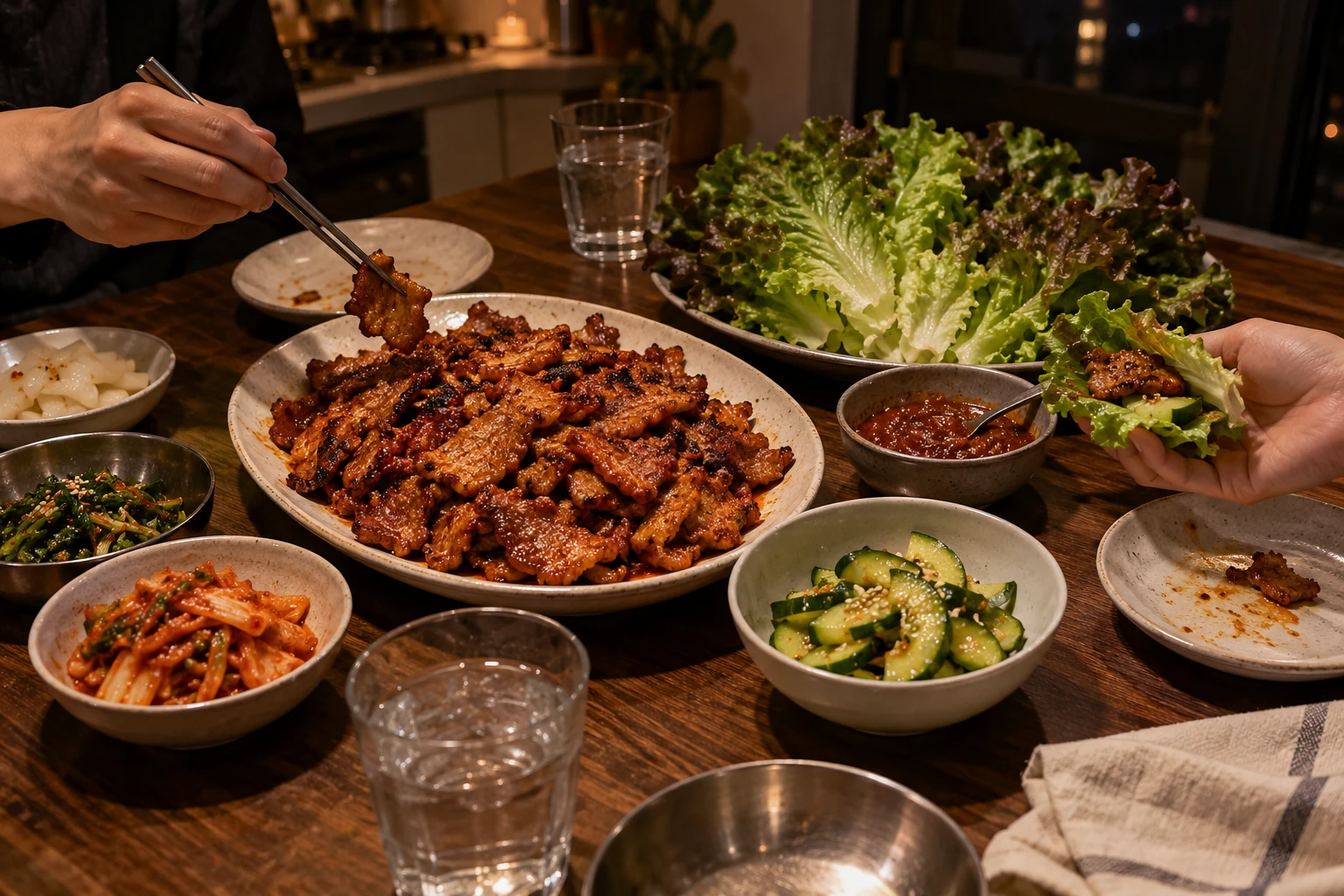
Picture a table running out of space, with a dark window behind it and a bowl of cucumber catching the kitchen light. Someone pulls a sleeve out of the way. A lettuce leaf is already waiting in an open hand.
There is a useful moment just before a meal gets going: everything is ready, but nothing has been assembled. The sauce is still in its bowl. The leaves are cool. Then the first hot slice lands, its edges darkened and its middle still juicy, and dinner starts to happen.
This is the evening we are building. Seoul is our point of departure: Korean barbecue, small shared dishes and the pleasure of wrapping a bite yourself. Our version brings that rhythm into a home kitchen, with a frying pan at the centre of the work.
BEFORE THE HEAT
Get the table ready
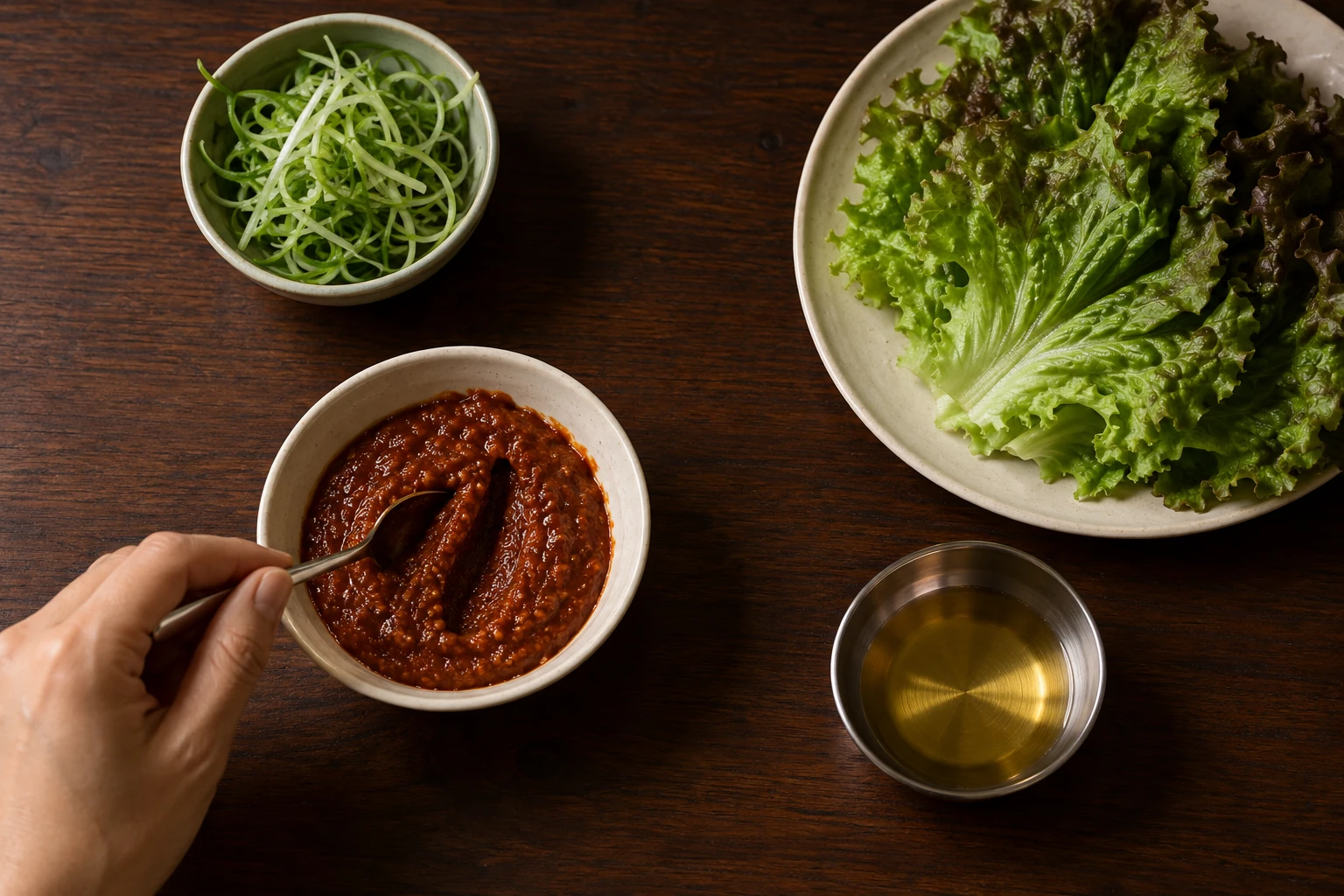
Wash the lettuce and dry it properly. Water hiding in a fold will run straight down your wrist later. Slice the cucumber, stir the dressing and keep the two apart. Put the ssamjang in a small bowl with a spoon of its own.
Ssam is food wrapped in a leaf or another edible wrapper; lettuce and perilla are familiar choices around a Korean barbecue table. Ssamjang brings fermented soybean paste and chilli paste together in a concentrated seasoning. Start with a small dab. You can add more to the next bite.
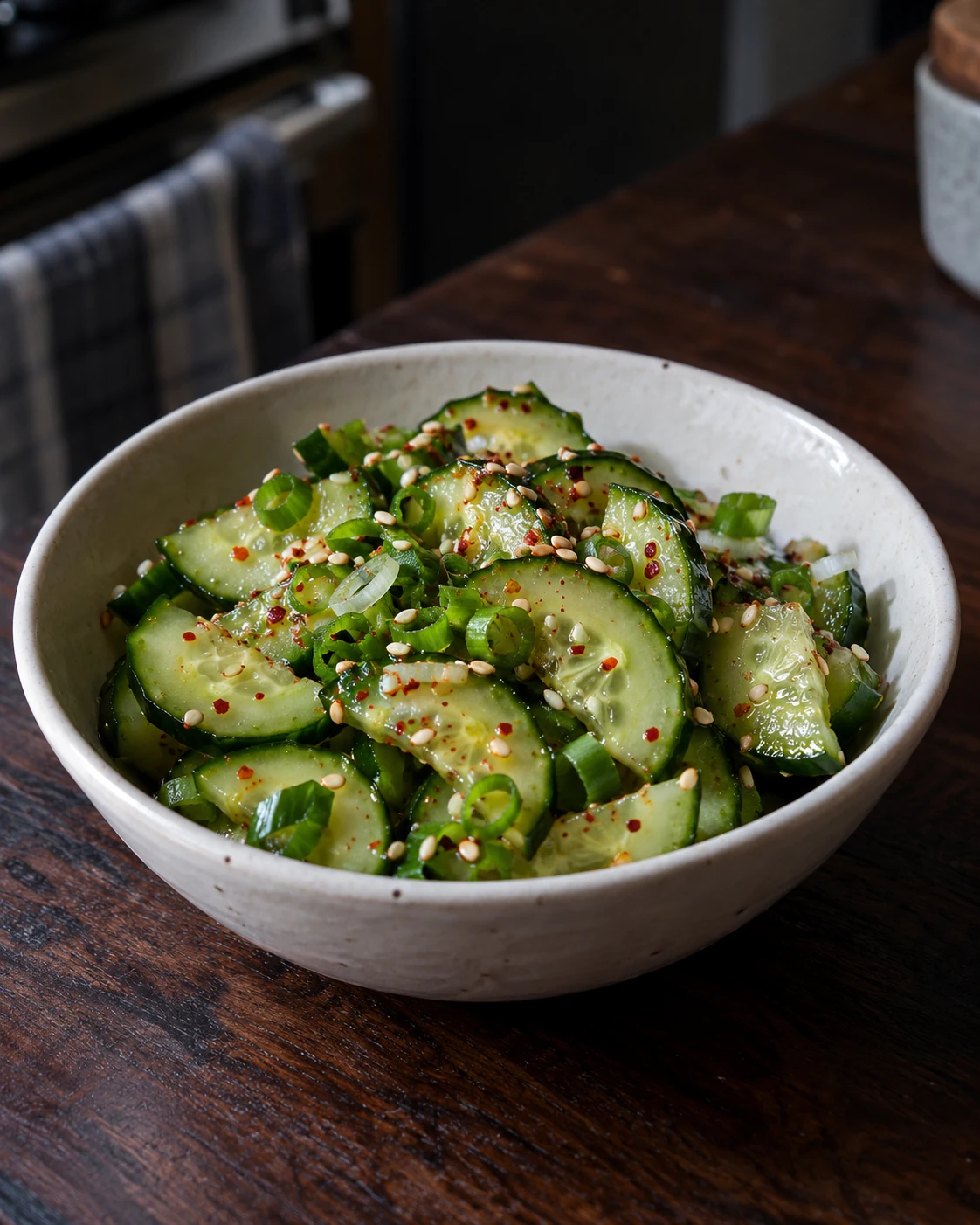
At our table, the cucumber gets vinegar, sesame and a little gochugaru. Keep its dressing sharp and the chilli restrained. There is already heat waiting on the pork; the cucumber has another job to do.
Clear a space for a warm serving plate. Once the meat is ready, you will want to sit down.
AT THE STOVE
Give the pork some room
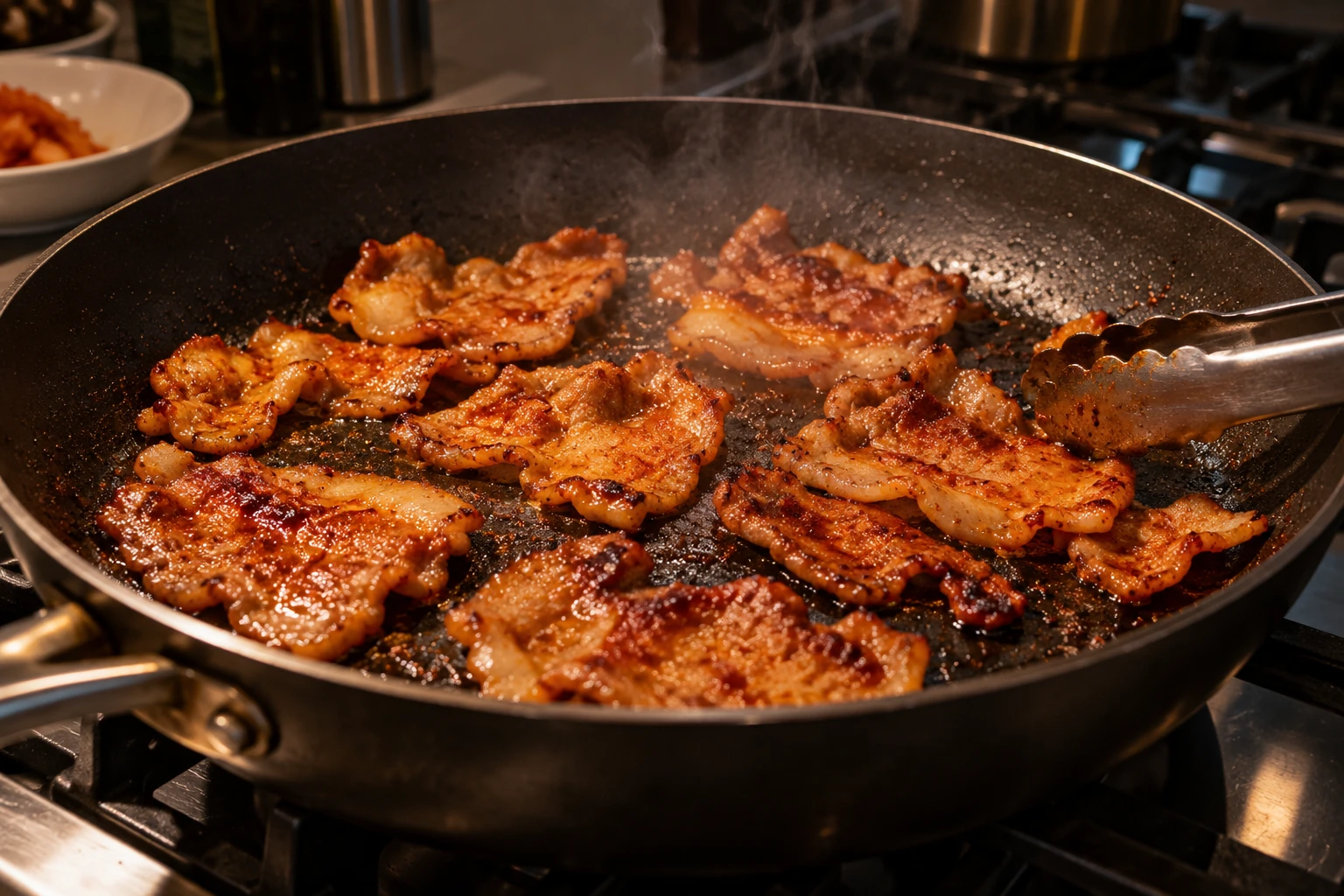
The pork is thinly sliced shoulder, coated with gochujang, garlic, ginger and a little sugar. It belongs to the family of spicy pork dishes often called dwaeji bulgogi or jeyuk bokkeum. This version is made in a pan, with enough space for the surface to colour.
That space matters. Tip the whole bowl into a small pan and the meat releases liquid faster than it can evaporate. Work in batches instead. You should hear a steady sizzle as the slices touch down.
The marinade will darken as it cooks. Turn the meat, watch the pan and lower the heat if the coating begins to catch. Aim for browned edges with a little chew, while the pork cooks through. Black, bitter sugar will follow you all the way to the table.
Transfer each batch to the warm plate. Keep going, then bring the whole lot out while the glaze still shines.
Give the pan room.
Then pull up a chair.
THE FIRST BITE
Keep the wrap small
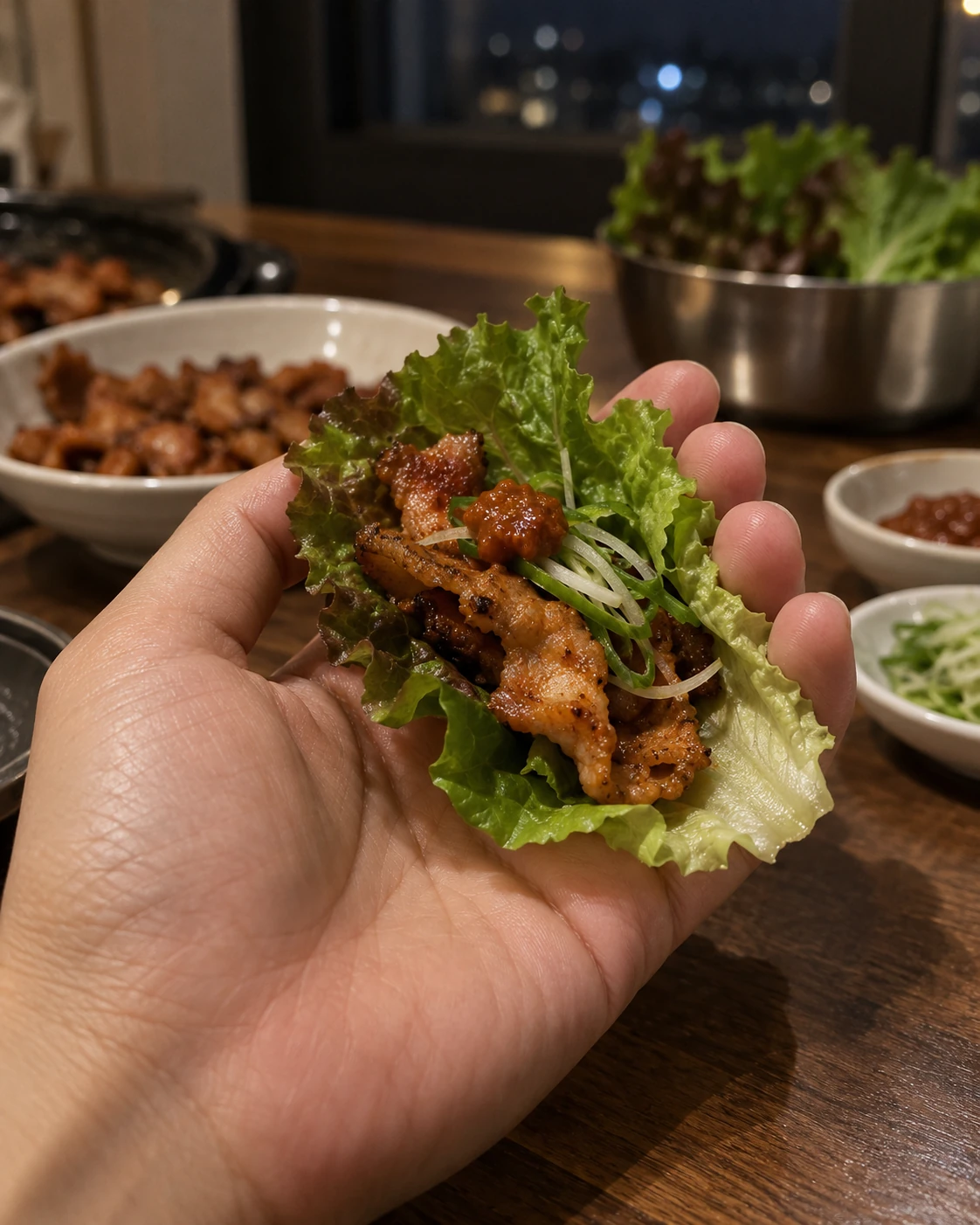
Lay a lettuce leaf across your palm. Add a piece of pork, a dab of ssamjang and a few threads of spring onion. Fold the leaf around the filling. A manageable mouthful keeps the hot meat, cool leaf and savoury paste together.
The first mouthful interrupts the conversation. The next starts an argument about how much sauce is enough. Eat a little cucumber between bites: its vinegar cuts through the richness and leaves you ready for another piece of pork. Try a thinner smear of sauce next time, or a sharper tangle of onion.
Perilla leaves are lovely here if you can find them. Lettuce works on its own. There is no need to delay dinner for the last item on a shopping list.
Put a serving spoon in each shared dish, pass things within reach and let people find their own proportions. This is where the recipes become a meal.
THE LAST PAN
Save room for the rice
Keep the rice ingredients ready in the kitchen while you eat the pork. When the first round slows down, return to a clean pan. There is one more thing to make.
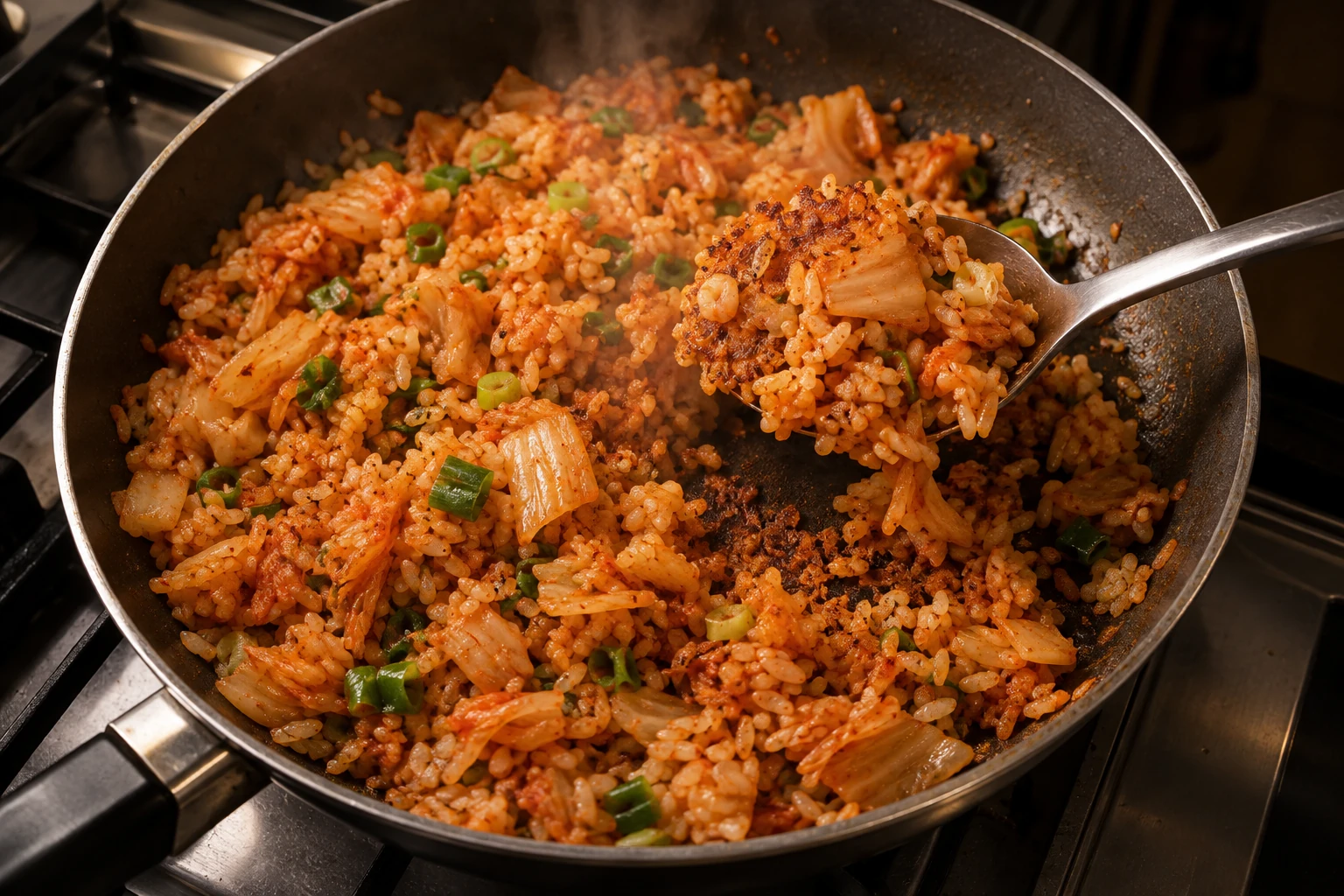
Use kimchi with a clear fermented tang. Fry it briefly with spring onion until the cabbage softens, then work in the cooked rice. Add the kimchi juice gradually: enough to season the grains without leaving them swimming.
Once everything is hot, spread the rice across the pan and leave it alone for a short spell. Lift an edge. If it has begun to crisp, fold those golden patches through the softer rice. Finish with sesame oil, then divide between bowls and add the eggs.
Rice is our final course tonight. The whole menu also works without this pause: cook the rice first, keep it hot and serve it beside the pork. Choose the rhythm that lets you enjoy your own dinner.
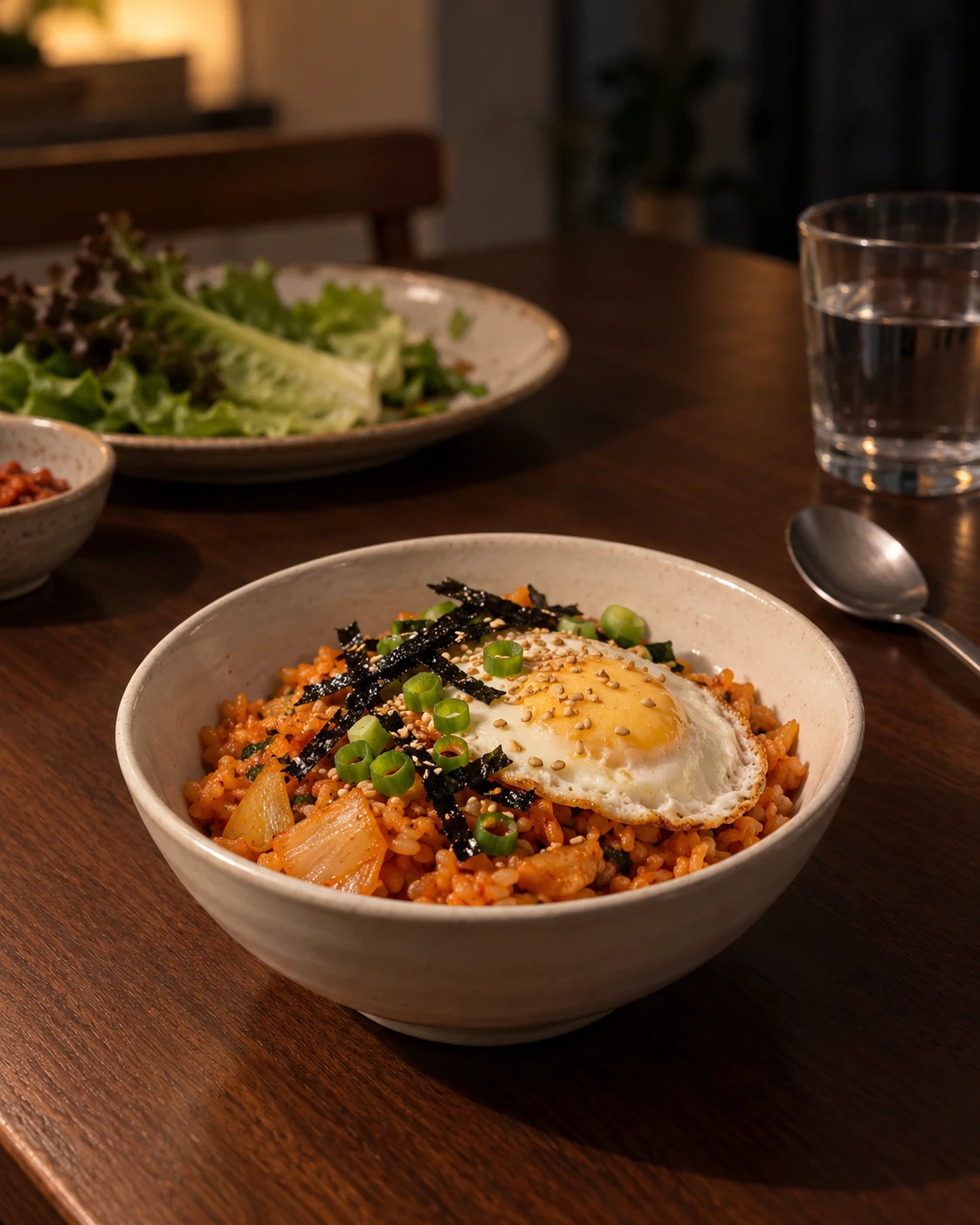
By the end, the lettuce plate is nearly empty. A spoon has left a red streak in the sauce bowl. There are a few sesame seeds on the table and one crisp patch of rice still being negotiated.
Leave the plates for a minute. Nobody is in a hurry to move.
Make it your evening ↓BRING THE EVENING HOME
Cook the
evening.
If rice is made from scratch, its cooking and cooling time is additional to the recipe time. Keep the chilled rice refrigerated until the final course.
Earlier that day
cook the rice if needed, chill it promptly and refrigerate it. Mix the ssamjang and keep it covered in the fridge. Prepare the pork marinade.
About an hour before eating
coat the sliced pork and refrigerate for at least 30 minutes. Wash and dry the leaves. Slice the spring onions and cucumber; keep the cucumber dressing separate. Measure the rice ingredients and keep the cooked rice refrigerated.
The first round
put the cold dishes and warm serving plate within reach. Cook the pork in batches, dress the cucumber and eat the wraps while the meat is hot. Allow about 15–20 minutes for the pork, depending on the pan.
The finish
return to a clean pan for the kimchi rice. Fry the eggs in a second pan as the rice finishes. Bring out four small bowls and serve immediately.
A LITTLE CONTEXT
Korean food notes.
This is a Seoul-inspired home dinner, with our own menu variations. The recipes are development drafts and have not been cooking-tested.
THE TABLE IS YOURS.
One more bite.
Keep the bowls within reach. There is always another combination to try.
Read another story ↗