
The useful basics
Lentils that keep their shape
A quiet simmer is kinder than a rolling boil. Cook whole lentils until tender, then add the sharp dressing that makes them taste alive.
THE PAYOFFTender whole lentils for salads, sides and warm bowls
TAKE IT STEP BY STEP
The method.
Check which lentils you have
Use whole green or brown lentils for this method. Split red lentils soften and break down much faster, which is useful for dal but different from an intact salad lentil. Check the packet for the variety’s suggested time.
Sort and rinse
Spread the lentils out briefly to remove any small stones or damaged pieces, then rinse in a sieve. Put them in the saucepan with the measured water and optional bay leaf. They should have enough liquid to move gently.
Keep the simmer quiet
Bring to the boil, then lower the heat to a gentle simmer. Leave the lid slightly ajar and top up with hot water if the lentils begin to emerge from the liquid. They should not be thrown around by a hard boil.
Taste for tenderness
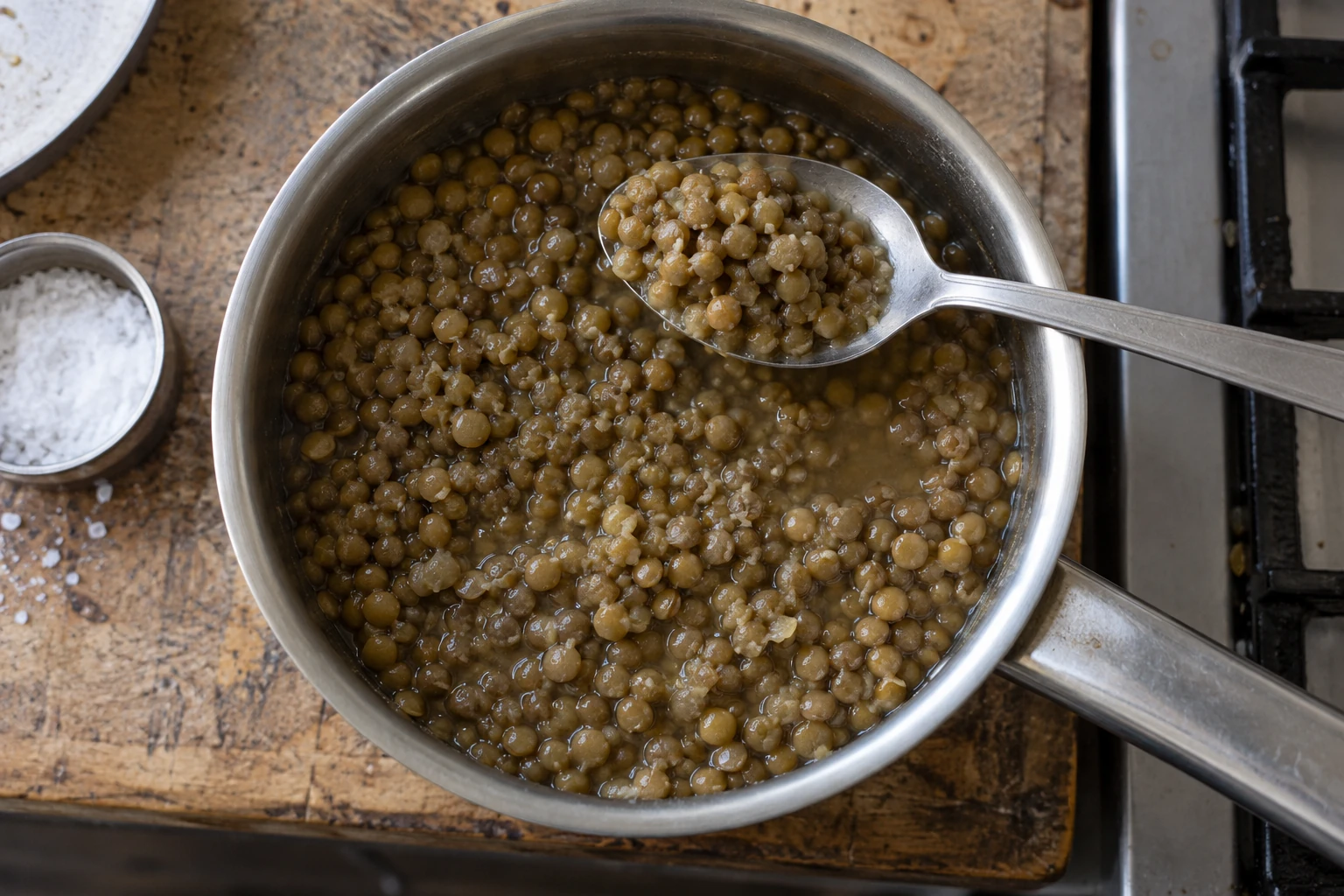
Begin tasting after 20 minutes. Depending on variety and age, they may need 20–35 minutes or longer. Cool a spoonful before testing: the centre should be tender without a chalky bite, while the skins still hold together.
Drain and dress
Drain any excess liquid and remove the bay leaf. Add salt, a little olive oil and lemon or vinegar after the lentils are tender. Toss while warm so the seasoning spreads evenly, then taste again before serving.
WHEN IT GOES SIDEWAYS
A small fix.
They are splitting into a mash
Lower the heat and stop cooking sooner. Confirm they are whole lentils rather than split red; neither extra stirring nor more draining can restore broken skins.
They stay firm for ages
Older lentils can take longer. Keep them covered with liquid and delay lemon, vinegar or tomatoes until tender; do not let the pan boil dry.
They taste bland
Season after cooking and include a little acidity or a savoury dressing. Earthy lentils need an intentional finish, not simply a longer boil.
Use whole lentils in a warm salad or under roasted vegetables. For a creamy red-lentil dal, follow its own liquid ratio and method.