
The final minute
Taste, adjust, taste again
When dinner needs something, stop guessing at the whole pot. A spoonful gives you a small, useful place to experiment.
THE PAYOFFMore deliberate seasoning, one small adjustment at a time
TAKE IT STEP BY STEP
The method.
Start at serving temperature
Let a spoonful cool enough to taste comfortably. A boiling-hot mouthful makes careful comparison difficult. Notice what the dish already tastes of, and check what is about to join it: salty cheese, olives or a sharp dressing may finish the job.
Keep one spoonful unchanged
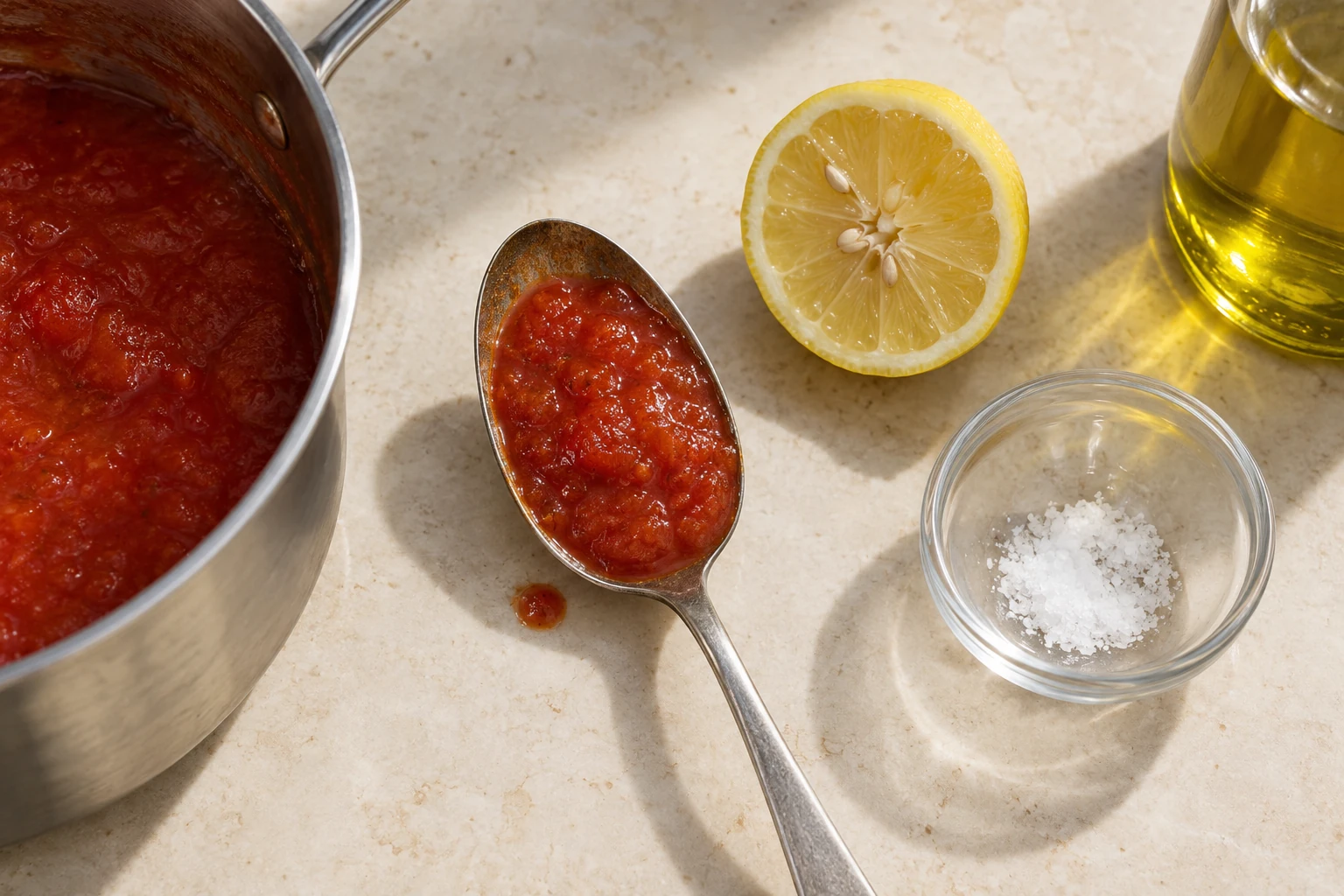
Put a tablespoon of the dish in each of three little bowls. Leave the first alone. Add just a few grains of salt to the second, and one or two drops of lemon or vinegar to the third. Stir each with a clean spoon.
Listen to the salt
Taste the unchanged sample, then the salted one. Does the main ingredient become clearer, or does it simply become salty? Salt can bring flavours forward, but a dish containing stock, soy, miso, cheese or capers may already have enough.
Try the acid separately
Compare the third sample with the first. A little acidity can give a rich or sweet dish a brighter finish. You are looking for a useful contrast, rather than an obvious lemon or vinegar flavour. Choose an acid that belongs with the food: lime for a coconut curry, lemon for beans, or wine vinegar for a tomato dish.
Scale up gently
If a change helps, add a little of that ingredient to the whole dish. Stir thoroughly, give it a moment and taste again with a clean spoon. Adjust in stages; the small sample is a direction, not a precise formula for the pan.
WHEN IT GOES SIDEWAYS
A small fix.
It already tastes too salty
Add more unsalted base ingredients or liquid where the dish allows. Lemon does not remove salt, and a potato is not a reliable salt eraser. Avoid reducing the dish further.
It tastes too sour
Try a little more unsoured base, or a small amount of fat or sweetness if it suits the dish. Test in a spoonful first; sugar can soften the impression of sourness without removing the acid.
It still tastes flat
Check texture, aroma and serving temperature too. Fresh herbs, toasted spices or a crisp topping can help, but do not add every possible finish at once.
Season with the complete plate in mind. A mellow gratin next to a lemony salad needs a different finish from the same gratin served alone.
THE USEFUL TOOLS
Useful tools for this technique.
Use what you already have. If you need something, these are a few options to consider.
As an Amazon Associate I earn from qualifying purchases.
Amazon.com · US store
OXO Stainless Steel Salt and Pepper Grinder Set
A pepper grinder lets you add a little freshly ground pepper at a time, then taste again.
Before you chooseUse measured salt when a recipe calls for it; a grinder does not replace a measuring spoon.
View on Amazon.com