
Bread notes
Read the dough, not just the clock
A cooler kitchen slows things down. Learn the difference between the first rise and the final proof, and give your loaf the time its dough needs.
THE PAYOFFBetter judgement of yeast-dough readiness
TAKE IT STEP BY STEP
The method.
Know which rise you are watching
Start with a reliable plain yeasted wheat-bread recipe. Its first rise develops the dough before shaping; its final proof happens after shaping. Sourdough, rich brioche and very wet focaccia have different needs, so do not apply one clock to all of them.
Make the rise visible
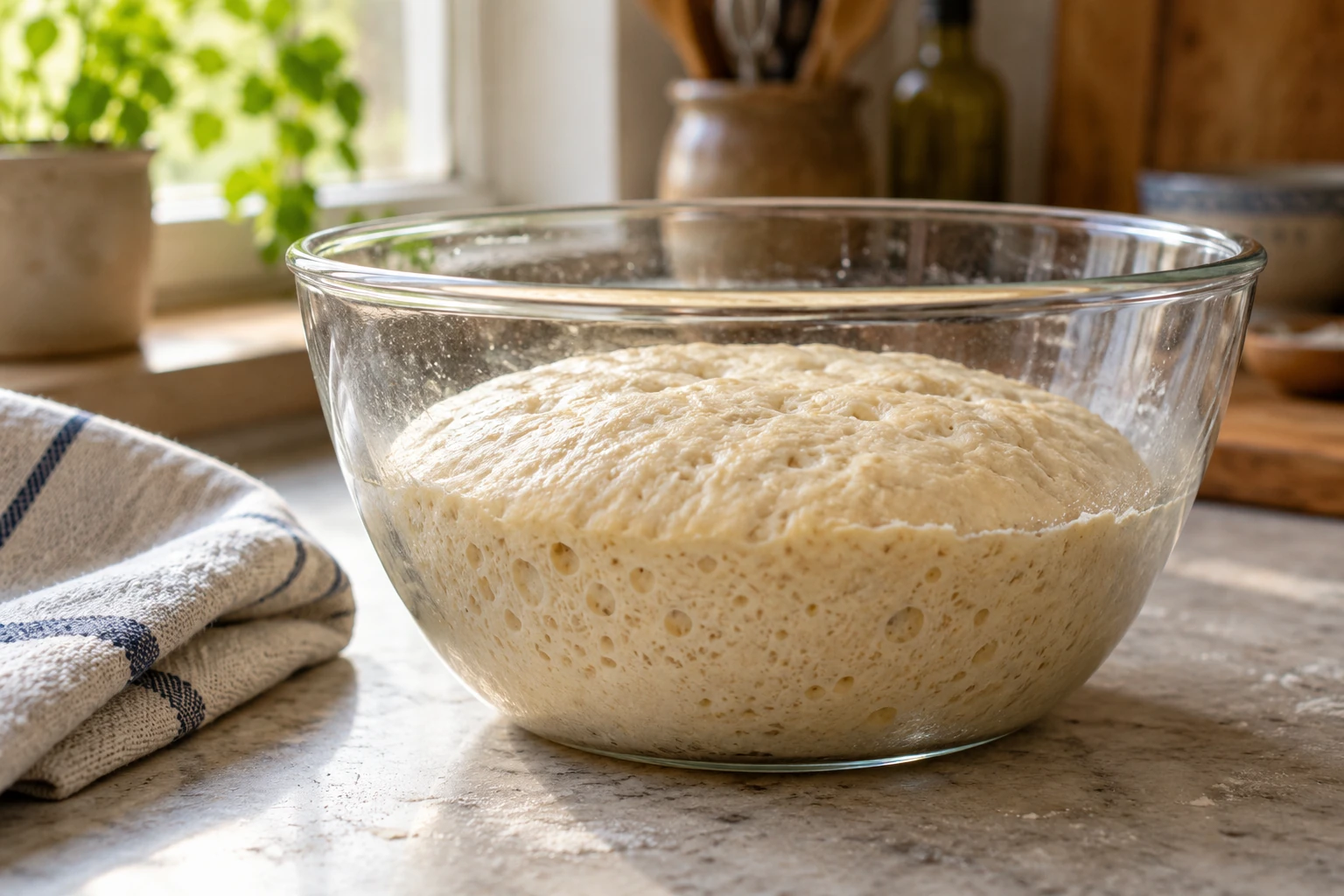
Put the mixed dough in a container with room to expand, cover it as the recipe directs and note the starting level. A straight-sided container makes the change easier to judge than a very wide bowl.
Choose gentle warmth
Let the dough rise in a comfortable, draught-free room, roughly 22–26°C for many ordinary yeast breads. Cooler dough can simply take longer. Avoid a hot oven, radiator or direct sun: speeding the surface is not the same as an even rise.
Check the recipe’s first-rise target
Look for the specified increase in volume and a lighter, aerated feel. Some recipes ask for doubling; others do not. When the first rise is ready, shape as directed rather than leaving the dough indefinitely because the timer has not sounded.
Judge the final proof gently
Near the beginning of the recipe’s final-proof window, lightly flour a finger and press a small dent into a suitable shaped loaf. A rapid spring-back suggests more time is needed; a dent that remains and a puffy feel suggest readiness. Very fragile dough that collapses may be overproofed. Bake using the recipe’s oven temperature and timing.
WHEN IT GOES SIDEWAYS
A small fix.
The dough barely rises
Give cool dough more time and check that the yeast was in date and used as directed. Very hot mixing water can damage yeast; extra flour is not a cure for a slow rise.
A dry skin forms
Cover the dough properly next time. A dried surface can tear as the dough expands and makes the touch test less useful.
The loaf collapses when touched
It may have proofed too far. Follow your recipe’s recovery advice; some plain yeast doughs can be reshaped and proofed again, but that is not a universal rescue for every dough.
Keep a note of your kitchen temperature and how the dough looked when it was ready. Use a finished loaf for garlic bread or toast, rather than changing the bake to match the clock.
THE USEFUL TOOLS
Useful tools for this technique.
Use what you already have. If you need something, these are a few options to consider.
As an Amazon Associate I earn from qualifying purchases.
Amazon.com · US store
Escali Primo Digital Kitchen Scale
A digital scale helps keep flour and water quantities consistent between batches.
Before you chooseUse the tare function with your mixing bowl and check that the display remains visible.
View on Amazon.com