
The last minute
Keep a cup of pasta water
The finish happens in the sauce pan. A little cloudy cooking water helps turn separate pasta and sauce into one good mouthful.
THE PAYOFFPasta coated in sauce rather than sitting beside it
TAKE IT STEP BY STEP
The method.
Have the sauce waiting
Warm the prepared sauce in a wide pan while the pasta cooks. Use enough water for the pasta to move and stir after adding it. Salt the water moderately, especially if the finished sauce will contain salty cheese or other seasoned ingredients.
Start tasting early
Follow the packet timing, but taste a piece about 1 minute before the stated al dente time. For this finishing method, it should still have a little firmness because it will cook a little more in the sauce.
Save the cloudy water
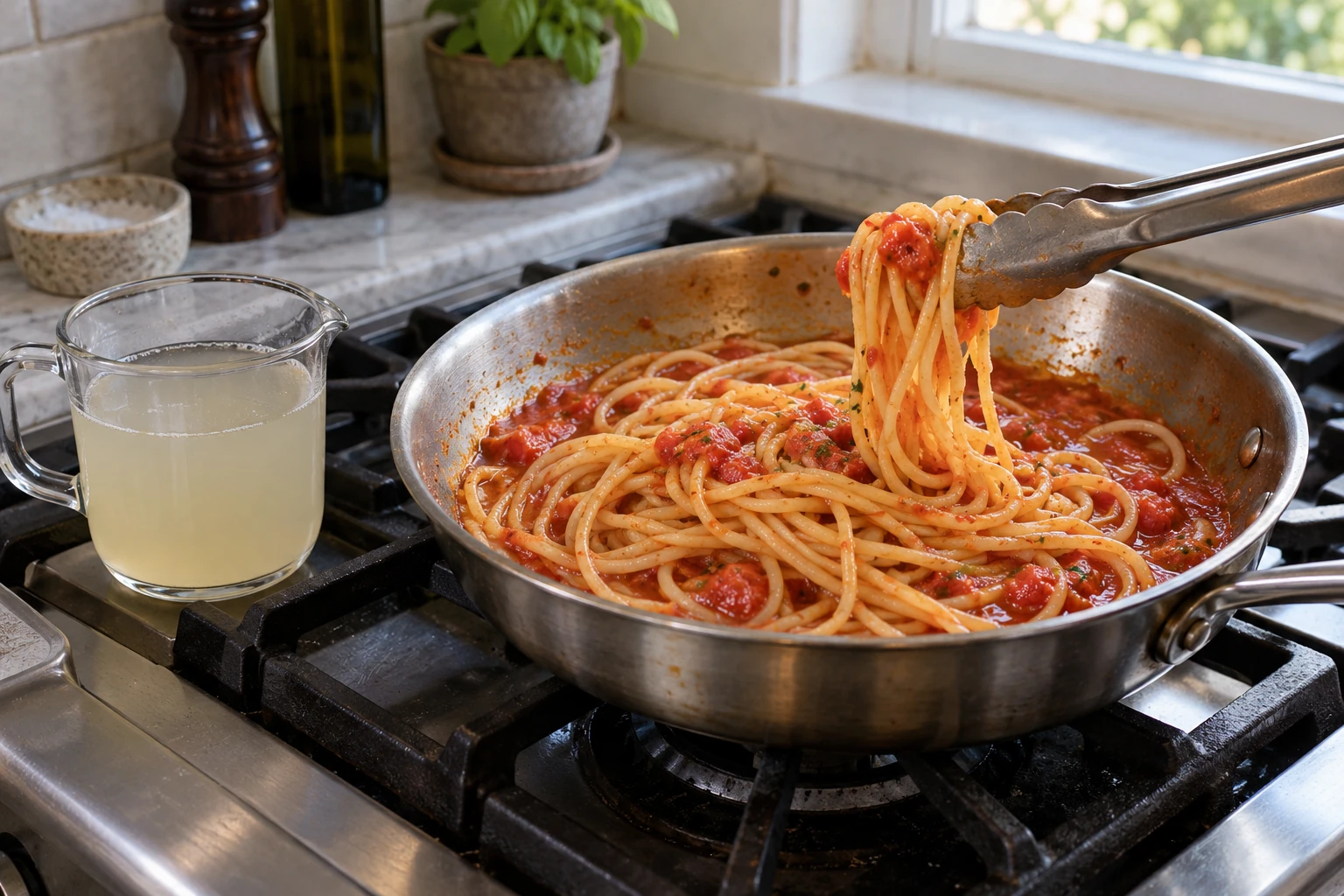
Scoop out a heatproof mug of cooking water just before draining. Take care around the steam. Drain the pasta without rinsing it; the surface starch is useful here.
Bring the two together
Add the pasta to the gently bubbling sauce with 2–3 tablespoons of reserved water. Toss or stir over medium heat for about 1–2 minutes, until the pasta is tender with a little bite and the sauce clings.
Adjust the finish
If the pan looks dry, add another tablespoon of water and toss again. If the sauce is watery, let it bubble briefly while moving the pasta. Taste before adding more salt, then serve straight away.
WHEN IT GOES SIDEWAYS
A small fix.
The sauce becomes too salty
Use plain hot water for any further loosening, and avoid extra salt or cheese. Next time salt the cooking water less for a salty sauce.
There is a pool of watery sauce
Add less water at first. Toss briefly over heat to combine and reduce, stopping before the pasta overcooks.
The pasta is soft before it reaches the sauce
Transfer it earlier next time. Finishing in sauce is extra cooking time, not a way to firm up already overcooked pasta.
For butter or olive-oil sauces, the same small additions help the fat and cooking water coat the pasta. Avoid pouring in the entire mug automatically.