
Knife notes
Look after the edge
A useful knife needs more than occasional sharpening. A stable board, a quick hand-wash and protected storage make every chopping session better.
THE PAYOFFA cleaner, safer setup and less avoidable edge damage
TAKE IT STEP BY STEP
The method.
Make the board stable
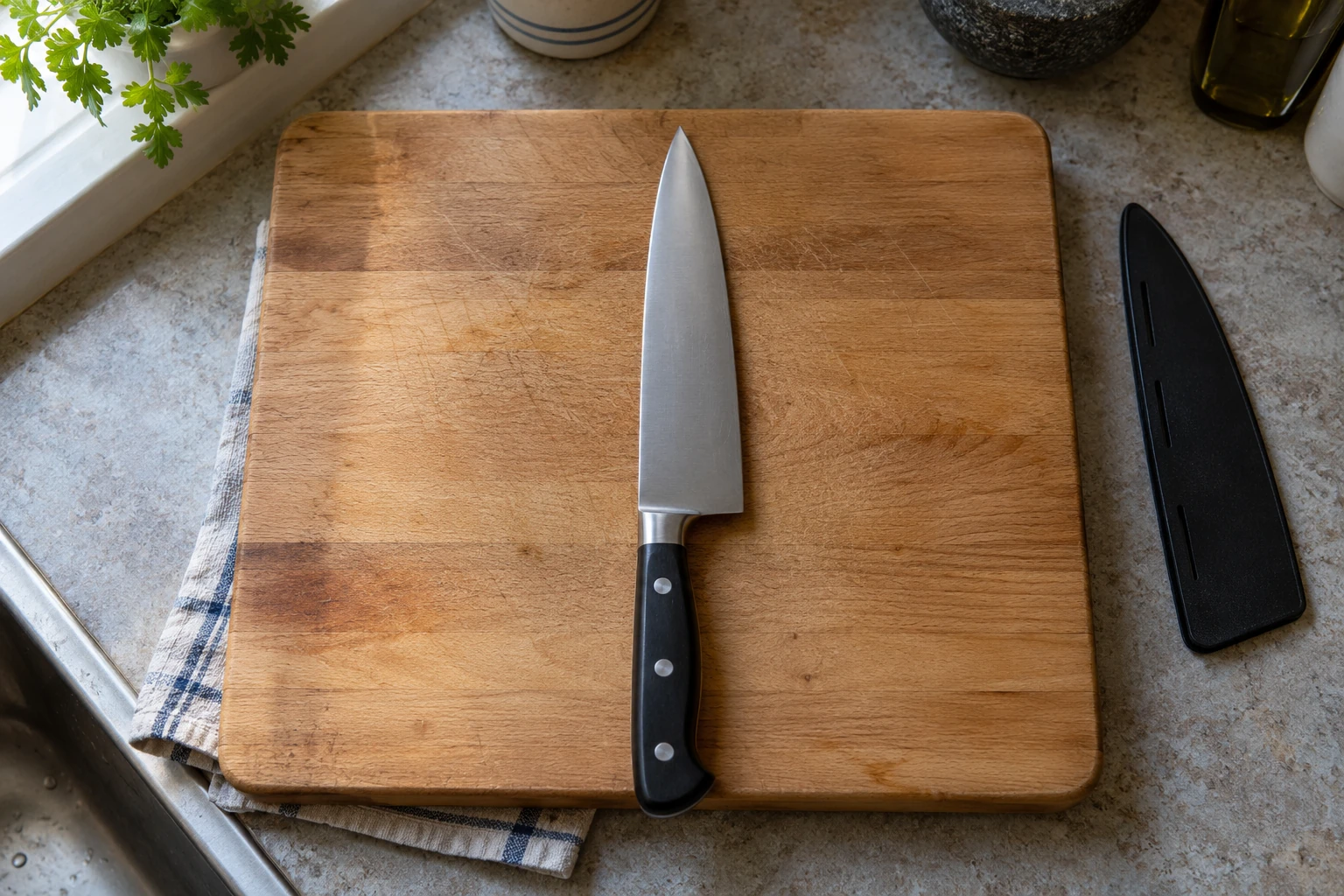
Place a damp, flat towel under a cutting board that tends to slide. Keep the working surface clear and the handle within comfortable reach. Use wood or a suitable synthetic board, rather than glass, stone or a dinner plate.
Use the knife for cutting
Choose a blade suited to the job. A standard chef’s knife is not a tin opener, screwdriver or tool for chopping frozen blocks and bones. Move chopped ingredients with a scraper or the blade’s spine rather than dragging the sharp edge sideways across the board.
Notice when cutting takes force
If the knife repeatedly slips on tomato skin or crushes herbs instead of cutting cleanly, arrange suitable sharpening. Follow the knife maker’s guidance: honing tools, sharpening stones and serrated blades do not all need the same treatment.
Wash it visibly
Hand-wash after use with warm water and mild washing-up liquid. Keep the blade visible and work carefully from the spine side, away from the edge. Do not leave it hidden in a sink of water or loose among dishes. Dry immediately.
Protect the edge in storage
Put the dry knife in a blade guard, fitted drawer tray, suitable block or other secure storage. Keep it from knocking against other metal. Store it where the handle can be reached without brushing against an exposed blade.
WHEN IT GOES SIDEWAYS
A small fix.
The board still slides
Flatten the towel and dry excess water from the counter. A warped board needs replacement rather than more pressure from your hand.
The knife becomes dull quickly
Check the cutting surface and storage first. Dishwasher cycles and loose contact with cutlery can damage an edge between sharpening sessions.
There are chips or a loose handle
Stop using that knife and have it repaired or replaced. Extra force or a quick honing session is not a repair for structural damage.
Start with one well-maintained everyday knife and a board that stays still. Learn sharpening as its own skill, with instructions matched to your blade.
THE USEFUL TOOLS
Useful tools for this technique.
Use what you already have. If you need something, these are a few options to consider.
As an Amazon Associate I earn from qualifying purchases.
Amazon.com · US store
Victorinox Fibrox Pro 8-inch Chef's Knife
A comfortable chef's knife supports controlled slicing across the fibres.
Before you chooseChoose a blade length you can handle comfortably; hand-wash and protect the edge.
View on Amazon.com