
The useful basics
Basmati, light & separate
A measured amount of water, a quiet simmer and a proper rest. Give the grains a consistent beginning.
THE PAYOFFSeparate white basmati grains without draining a large pot
TAKE IT STEP BY STEP
The method.
Check the rice
Use ordinary white basmati for this starting method, not brown, parboiled or quick-cook rice. Follow any specific packet instructions. Grain age, saucepan and lid fit affect water needs, so treat 1 part rice to 1½ parts water by volume as a starting point rather than a rule for every rice.
Rinse and drain
Measure the dry rice first. Rinse it in a sieve under cold running water, moving it gently until the runoff is much less cloudy. Drain thoroughly. For this rinsed method, remove 2 tablespoons of water from the measured 1½ cups to allow for water clinging to the grains.
Bring to a gentle simmer
Put the drained rice and measured water into the saucepan with the optional salt. Bring to a gentle simmer uncovered, giving it one stir to distribute the grains. Once the surface is bubbling across the pan, cover and turn the heat low.
Leave it alone
Simmer for 12 minutes without stirring or repeatedly lifting the lid. The heat should be quiet enough that the pan does not boil over. Quickly check at the end: there should be no pool of water. If there is, cover and cook for another minute or two.
Rest, then lift
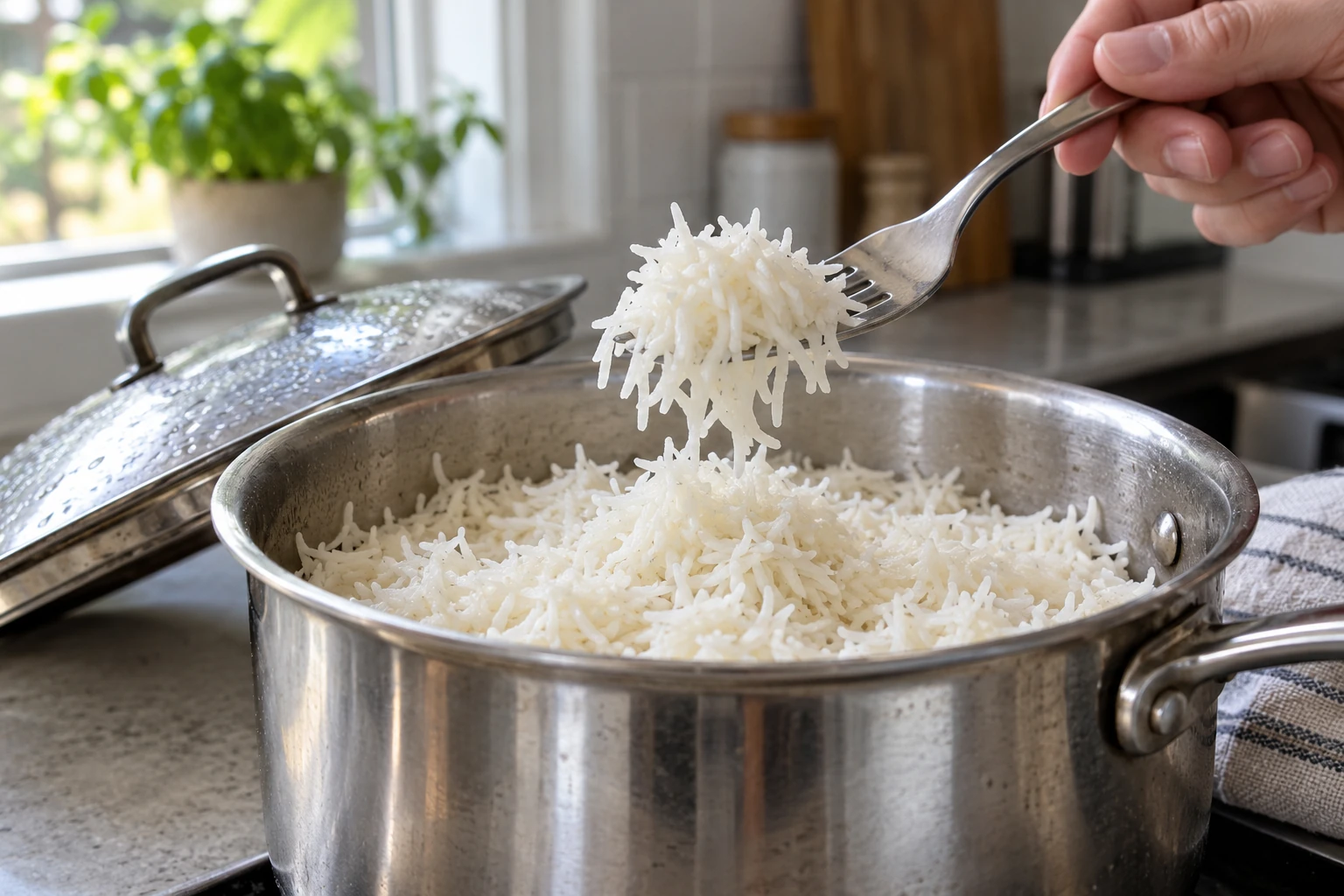
Move the pan off the hot hob. Leave it covered for 10 minutes, then gently lift and separate the rice with a paddle or broad spoon. Do not mash or vigorously stir the grains. Serve straight away.
WHEN IT GOES SIDEWAYS
A small fix.
The grains are firm and the pan is dry
Sprinkle over 1–2 tablespoons of boiling water, cover and heat very gently for 2 minutes. Rest again. Next time check for a leaking lid or excessively high heat.
The rice is wet or mushy
Let it rest before judging. If grains have broken down, cooking longer will not restore them. Drain rinsed rice well and reduce the water slightly on the next batch.
The base is scorched
Lift the upper rice into a clean bowl without scraping the bottom. Use a gentler simmer or a heavier saucepan next time.
Keep a note of the cup, pan and brand that work for you. A reliable small batch is more useful than chasing one universal water ratio.