
Knife notes
Slice across the grain
One small change at the board makes a big difference to a piece of steak. Find the fibres, then shorten them.
THE PAYOFFShorter fibres and easier-to-chew slices
TAKE IT STEP BY STEP
The method.
Find the direction
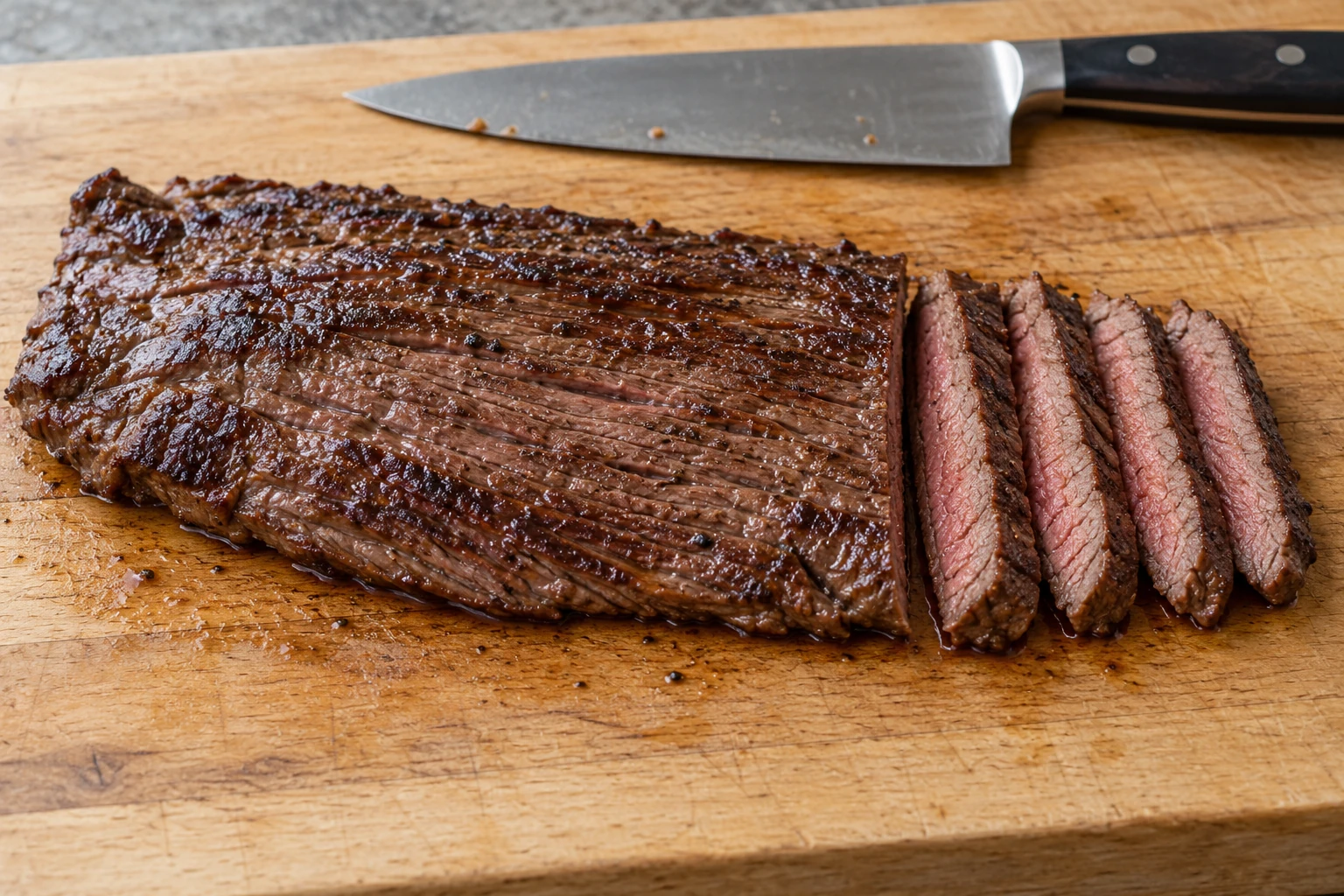
Before cooking, look closely at the meat. The grain is the direction of the muscle fibres: parallel lines running across the surface. Flank and skirt steak show them particularly clearly. Notice their direction now, because a browned crust can make them harder to see later.
Cook, then move to a clean board
This guide is about slicing a cooked whole steak, rather than making a tough braising cut tender by fast cooking. Follow your recipe for the cooking method, and use a clean board and utensils after handling raw meat. Rest the steak before carving.
Turn the meat
Place the steak so those visible lines run left to right. Your cuts should run front to back, approximately at right angles to the fibres. Rotate the meat rather than twisting your wrist into an awkward position.
Make thin, deliberate slices
For flank or skirt steak, aim for slices about 5 mm thick. Use long, smooth strokes and keep your supporting hand safely clear of the blade. A slight tilt of the knife makes wider slices, but the essential move is still across the fibres.
Check each section
If the fibre direction changes, separate the meat into manageable sections and rotate each one before slicing. A correctly cut slice shows short fibre ends across its face. Long threads running the length of a slice suggest you are cutting with the grain.
WHEN IT GOES SIDEWAYS
A small fix.
The grain is hard to see
Check an edge or the underside. Different muscles can point in different directions, so inspect each section rather than assuming the whole piece runs the same way.
The slices are still chewy
Try thinner slices across the fibres. Slicing helps, but cannot remove connective tissue or reverse overcooking. Some cuts need a long, moist cooking method.
The meat slides around
Dry the board, stabilise it with a damp cloth underneath and work in smaller sections. Sharpen a dull knife instead of forcing it through the meat.
Serve the slices together while warm. For a stir-fry that calls for raw sliced beef, the same fibre direction matters; keep raw-meat preparation separate from ready-to-eat food.
THE USEFUL TOOLS
Useful tools for this technique.
Use what you already have. If you need something, these are a few options to consider.
As an Amazon Associate I earn from qualifying purchases.
Amazon.com · US store
Victorinox Fibrox Pro 8-inch Chef's Knife
A comfortable chef's knife supports controlled slicing across the fibres.
Before you chooseChoose a blade length you can handle comfortably; hand-wash and protect the edge.
View on Amazon.com